Choosing an OLED TV in today’s market can be a bit overwhelming — especially when two models promise premium picture quality without climbing into flagship pricing. That’s exactly where the Samsung S85F and LG B5 come in. Both bring the hallmark benefits of OLED technology — perfect black levels, exceptional contrast, and wide viewing angles — making them fantastic upgrades from traditional LED or budget QLED TVs.
But even though they seem similar at first glance, their strengths target slightly different users. The Samsung S85F leans into brighter HDR performance and richer color expression for a more energetic viewing style, while the LG B5 focuses on cinematic accuracy, Dolby Vision optimization, and better overall value. This breakdown will highlight where each model wins, so you can confidently choose the OLED that best fits your viewing environment, content preferences, and budget.
Samsung S85F — Short Review
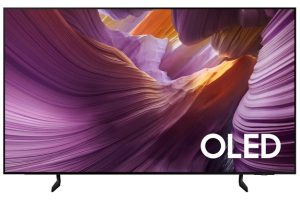
Samsung S85F
The Samsung S85F (2025) is Samsung’s entry-level 4K OLED for the year, but it punches above its price. It’s offered in 55″, 65″, 77″, and 83″ sizes. On the 55- and 65-inch models, Samsung uses a QD-OLED panel, which brings enhanced color saturation and vibrancy — making HDR content look more vivid and “alive.” The larger sizes default to WOLED but still maintain the deep blacks and contrast that define OLED.
In dark-room viewing, the S85F delivers inky blacks and rich color depth, producing impressive cinematic contrast. Even with some ambient light, the panel and Samsung’s processing help maintain contrast better than many OLEDs at this price.
While it’s not the brightest OLED on the market, its HDR performance is respectable. Review data shows that HDR content retains good highlight detail and reasonably strong brightness for most scenes — enough to give HDR movies and games a satisfying punch without the price tag of a top-tier OLED.
For gaming, the S85F is very well equipped: 4 × HDMI 2.1 ports, 4K at 120 Hz, VRR (FreeSync / G-Sync compatible), ALLM, and low input lag make it solid for modern consoles and gaming PCs — especially if you run multiple devices and want flexibility.
On the smart-TV side, Samsung’s Tizen / Vision AI platform offers wide app support, upscaling, AI-assisted enhancements, and smooth navigation. Audio is basic but serviceable: a 2.0-channel ~20 W speaker system with Dolby Atmos support — fine for everyday use but best complemented with a soundbar for films or cinematic content.
| Samsung S85F Prices | |
| 83-Inch (QN83S85FAEXZA) | Check Today’s Price (Amazon.com)… |
| 77-Inch (QN77S85FAEXZA) | Check Today’s Price (Amazon.com)… |
| 65-Inch (QN65S85FAFXZA) | Check Today’s Price (Amazon.com)… |
| 55-Inch (QN55S85FAFXZA) | Check Today’s Price (Amazon.com)… |
LG B5 — Short Review
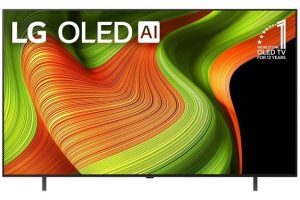
LG B5
The LG B5 OLED (2025) aims to deliver solid OLED value, and it does so with a broad size range: 48″, 55″, 65″, 77″, and 83″, which gives you flexibility whether you want a compact OLED for a bedroom or a large screen for a living room.
With LG’s WOLED panel and α8 AI Processor Gen2, the B5 delivers perfect blacks, great contrast, and very accurate color reproduction — a big plus for cinematic content or story-driven films where subtle color grading matters. Reviews note that, even out-of-the-box, the B5 delivers “reference-level” accuracy for SDR and HDR alike.
However, brightness is more modest compared with brighter OLEDs or QD-OLED sets: measured HDR peaks are lower, which makes bright scene highlights and specular details less intense. This isn’t a problem in a dark or controlled light environment, but in a bright room the impact can be muted and reflections may become more noticeable.
On the positive side, the B5 supports Dolby Vision, HDR10, and HLG, giving it wide HDR format compatibility — especially important if you stream a lot or watch UHD Blu-rays. For many users, this HDR format versatility outweighs the lower brightness, because it ensures content is displayed more true to creator intent.
Gaming performance on the B5 is also impressive: 4 × HDMI 2.1, 4K 120 Hz, VRR, ALLM, FreeSync / G-Sync Compatible, and Dolby Vision gaming on compatible consoles — plus very low input lag — make it a strong all-rounder for gamers who care about visuals and HDR.
Smart TV functionality via webOS 25 is smooth and user-friendly. The interface is clean, the Magic Remote is intuitive, and LG’s AI-driven picture / sound adjustments help keep things optimized without much fuss. Audio is similar to the S85F: 2.0-channel ~20 W with Dolby Atmos and basic sound tuning (AI Sound Pro), enough for everyday viewing but improving with a soundbar.
| LG B5 Prices | |
| 83-Inch (OLED83B5PUA) | Check Today’s Price (Amazon.com)… |
| 77-Inch (OLED77B5PUA) | Check Today’s Price (LG.com)… |
| 65-Inch (OLED65B5PUA) | Check Today’s Price (Amazon.com)… |
| 55-Inch (OLED55B5PUA) | Check Today’s Price (Amazon.com)… |
| 48-Inch (OLED48B5PUA) | Check Today’s Price (LG.com)… |
Specs & Key Feature Comparison
Before diving into detailed comparisons, here’s a concise look at the core specs and features of Samsung S85F and LG B5.
| Feature | Samsung S85F | LG B5 | |||||||||
| Display Technology | QD-OLED on 55″/65″, WOLED on 77″/83″ | WOLED | |||||||||
| Screen Sizes | 55″, 65″, 77″, 83″ | 48″, 55″, 65″, 77″, 83″ | |||||||||
| HDR Formats | HDR10, HDR10+, HLG (no Dolby Vision) | Dolby Vision, HDR10, HLG (no HDR10+) | |||||||||
| HDR Peak Brightness (approx.) | ~800 nits (10% window) | ~700 nits (10% window) | |||||||||
| Refresh Rate / Gaming | 4K 120 Hz, VRR, ALLM, FreeSync / G-Sync Compatible, 4× HDMI 2.1 | 4K 120 Hz, VRR, ALLM, FreeSync / G-Sync Compatible, 4× HDMI 2.1, Dolby Vision gaming | |||||||||
| Smart Platform | Tizen / Samsung Vision AI | webOS 25 with α8 AI Processor Gen2 | |||||||||
| Audio | 2.0 ch ~20 W, Dolby Atmos, Q-Symphony support | 2.0 ch ~20 W, Dolby Atmos, AI Sound Pro | |||||||||
| Price | Higher | Lower | |||||||||
|
|
Samsung S85F vs LG B5 Comparison
Now let’s compare Samsung S85F and LG B5 across the most important aspects to help you decide which one is the better choice for your setup.
Picture Quality
Both TVs deliver classic OLED strengths: perfect blacks, deep contrast, and wide off-axis viewing. The S85F stands out when you want more “pop” — its slightly higher peak brightness and QD-OLED panel on smaller sizes result in more vibrant, saturated colors and stronger highlight impact. That makes HDR content look more dynamic, and helps when you watch in rooms with some ambient light.
The B5 emphasizes accuracy and subtlety. Its WOLED panel renders colors with excellent fidelity, and uniformity is impressive across the screen. Shadows, gradients, and dark scenes gain a richness that’s ideal for cinematic movies or series. The tradeoff is that bright scenes feel more restrained, and the lower brightness + reflective screen make it less ideal in very bright or sunlit rooms.
Winner: Samsung S85F — for brightness and punch; LG B5 remains strong for cinematic accuracy in controlled lighting.
HDR Format & Performance
The S85F’s support for HDR10, HDR10+, and HLG means it handles many HDR sources well, with Samsung’s tone-mapping delivering reliable highlight detail and contrast. However, lacking Dolby Vision is a downside — many streaming services and UHD titles opt for Dolby Vision, which gives more consistent dynamic metadata and better tone mapping for creators’ intent.
The B5’s Dolby Vision support gives it an edge in compatibility and image fidelity. For streaming and UHD disc viewers who care about getting the content as intended, this flexibility makes a big difference. Combined with its accurate color and contrast, B5 often delivers a more “true-to-filmmaker” HDR experience (especially in darker rooms).
Winner: LG B5 — if your content is mostly Dolby Vision. But if you prefer HDR10+ (used by Amazon Prime Video and some UHD discs), the Samsung S85F has the edge there.
Motion & Gaming
Both TVs are well-equipped for gaming and fast-motion content. Each offers 4K 120 Hz, VRR, ALLM, and full HDMI 2.1 ports, ensuring smooth gameplay on consoles and gaming PCs.
The S85F adds value with Samsung’s ecosystem — solid upscaling, gaming-friendly processing, and ultra-smooth interpolation when needed. The B5 pushes for versatility with Dolby Vision gaming, which on supported consoles can improve HDR tone mapping and offer a richer visual experience in games designed for Dolby Vision. Input lag on the B5 is very low (well under 10 ms), making it very responsive for competitive and action gaming.
Winner: Draw — both are excellent for gaming; S85F leans toward flexibility and overall brightness, B5 offers Dolby Vision gaming and great responsiveness.
Smart TV Platform
Samsung’s Tizen / Vision AI on the S85F delivers a polished, feature-rich interface with smart upscaling, AI-aided enhancements, and broad app support. It integrates well if you already own Samsung devices, and ecosystem features (casting, SmartThings, AI voice) add convenience.
On the other hand, LG’s webOS 25 shines for its simplicity and speed. Navigation is intuitive, app launch is fast, and features like AI Picture / Sound optimization and a redesigned Magic Remote improve everyday usability. For users who want a “set and forget” smart-TV experience, webOS is hard to beat.
Winner: Draw — both are mature and full-featured; choice depends on user preference and ecosystem.
Audio Quality
Neither TV delivers spectacular built-in audio — both rely on a modest 2.0-channel ~20 W speaker setup with Dolby Atmos support. For casual watching, dialogue and standard content sound clear enough. For cinematic movies, gaming with deep sound effects, or music, a soundbar or external speaker setup is strongly recommended.
Winner: Draw — both benefit significantly from external audio solutions.
Price & Value
In most cases, the B5 offers the better value, especially when discounts or promotions are active. it usually sells at a lower price point or similar pricing compared to the S85F, depending on size and promotions. For buyers prioritizing feature set (Dolby Vision, full HDMI 2.1, good gaming performance) on a tighter budget, the B5 delivers impressive bang for the buck.
The S85F commands a slightly higher price, but justifies it with brighter OLED performance (especially on QD-OLED sizes), better highlight pop in HDR, and a bit more flexibility for varied viewing conditions. For those who can accept the extra cost, the S85F arguably offers a more “all-round” OLED experience.
Winner: LG B5 — for pure value; Samsung S85F is still a strong value if you prioritize brightness and flexibility.
Conclusion: Samsung S85F or LG B5?
If your priority is a brighter, more vibrant OLED that can handle a mixture of movies, series, games, and even moderately lit rooms — and you appreciate bold color, strong highlights, and flexible gaming options — then the Samsung S85F is an excellent all-around choice. Its QD-OLED panel (on smaller sizes), gaming readiness, and robust smart features make it a strong performer for living rooms and mixed-use media setups.
| Samsung S85F Prices | |
| 83-Inch (QN83S85FAEXZA) | Check Today’s Price (Amazon.com)… |
| 77-Inch (QN77S85FAEXZA) | Check Today’s Price (Amazon.com)… |
| 65-Inch (QN65S85FAFXZA) | Check Today’s Price (Amazon.com)… |
| 55-Inch (QN55S85FAFXZA) | Check Today’s Price (Amazon.com)… |
On the other hand, if you value Dolby Vision support, cinematic color accuracy, deep blacks, and the best possible value per dollar — especially for viewing in a darker or controlled environment — the LG B5 OLED becomes hard to beat. It offers a balanced OLED experience with full modern features at a generally lower price, ideal for movie lovers, gamers on a budget, or anyone wanting an entry into OLED without major compromises.
| LG B5 Prices | |
| 83-Inch (OLED83B5PUA) | Check Today’s Price (Amazon.com)… |
| 77-Inch (OLED77B5PUA) | Check Today’s Price (LG.com)… |
| 65-Inch (OLED65B5PUA) | Check Today’s Price (Amazon.com)… |
| 55-Inch (OLED55B5PUA) | Check Today’s Price (Amazon.com)… |
| 48-Inch (OLED48B5PUA) | Check Today’s Price (LG.com)… |