In 2025, mid-range Mini-LED TVs have reached a point where real-world performance differences matter more than brand names. The Samsung QN80F and TCL QM7K are prime examples—both promise premium brightness, fast gaming features, and modern smart platforms, yet they approach those goals in very different ways.
This comparison also matters because these two models sit in one of the most competitive TV segments today. Buyers considering the QN80F or QM7K are often cross-shopping alternatives like the Hisense U75QG, U8QG, or even Sony’s BRAVIA 5, depending on whether they prioritize brightness, processing, gaming features, or HDR format support.
Rather than asking which TV is “better” overall, the more useful question is which one best matches your viewing habits. Samsung leans toward ecosystem polish, processing refinement, and connectivity, while TCL focuses on raw HDR impact and aggressive value—especially when it comes to brightness and format support.
Samsung QN80F — Short Review
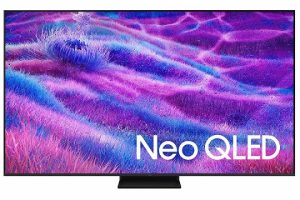
Samsung QN80F
The Samsung QN80F is part of Samsung’s 2025 Neo QLED lineup, positioned as a balanced Mini-LED option below the more premium QN85 and QN90 series. It’s designed to deliver strong everyday performance with an emphasis on consistency, clean upscaling, and reliable motion handling rather than extreme spec chasing.
At the core of the QN80F is Samsung’s NQ4 AI Gen2 processor, which does a very good job with lower-resolution content, cable TV, and compressed streaming sources. Samsung’s processing strengths are especially noticeable in motion clarity and image stability during sports and fast-paced scenes.
In terms of brightness, the QN80F is capable but not class-leading. Real-world measurements place its peak brightness at around ~930 nits in a 10% window, which is enough for impactful HDR highlights, but it doesn’t aim to overpower the room the way some brighter Mini-LED competitors do.
Gaming is one of the QN80F’s strongest areas. It supports 4K at up to 144Hz, variable refresh rate, and ALLM, and importantly, all four HDMI ports are full HDMI 2.1. This makes it an excellent option for users with multiple next-gen consoles or a gaming PC who don’t want to compromise on port flexibility.
The smart experience is handled by Samsung’s Tizen platform, which remains fast, stable, and well integrated with Samsung devices and soundbars. While app selection is broad, the overall appeal here is how smoothly everything works together within Samsung’s ecosystem.
| Samsung QN80F Prices | |
| 100-Inch (QN100QN80FFXZA) | Check Today’s Price (Amazon.com)… |
| 85-Inch (QN85QN80FAFXZA) | Check Today’s Price (Amazon.com)… |
| 75-Inch (QN75QN80FAFXZA) | Check Today’s Price (Amazon.com)… |
| 65-Inch (QN65QN80FAFXZA) | Check Today’s Price (Amazon.com)… |
| 55-Inch (QN55QN80FAFXZA) | Check Today’s Price (Amazon.com)… |
TCL QM7K — Short Review
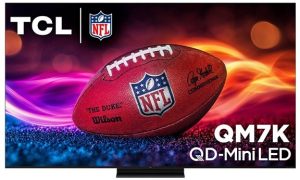
TCL QM7K
The TCL QM7K represents TCL’s value-driven approach to Mini-LED TVs in 2025. It’s aimed squarely at buyers who want maximum HDR impact and modern features at a more aggressive price, often undercutting established brands while still delivering strong performance.
One of the biggest strengths of the QM7K is brightness. In real-world testing, it can reach roughly ~1,700 nits in a 10% window (varies by size), which gives HDR content a noticeably more intense and punchy look compared to many mid-range Mini-LED TVs. Highlights stand out more, especially in movies and HDR streaming content.
HDR format support is another clear advantage. The QM7K supports Dolby Vision IQ, HDR10+, HDR10, and HLG, ensuring that you’re almost always getting the best available HDR format from major streaming platforms without relying on format fallbacks.
For gaming, the QM7K features a native 144Hz panel with support for VRR, ALLM, and 4K at 144Hz. However, unlike Samsung, TCL typically limits full HDMI 2.1 bandwidth to two ports, with the remaining ports operating at HDMI 2.0 speeds. For most users this is fine, but heavy gamers may notice the difference.
The QM7K runs on Google TV, offering a highly flexible and content-rich smart platform with excellent app support, profiles, and Google Assistant integration. TCL also markets the TV with Bang & Olufsen–tuned audio and Dolby Atmos support, giving it a slightly stronger built-in sound profile than average for its class.
| TCL QM7K Prices | |
| 115-Inch (115QM7K) | Check Today’s Price (Amazon.com)… |
| 98-Inch (98QM7K) | Check Today’s Price (Amazon.com)… |
| 85-Inch (85QM7K) | Check Today’s Price (Amazon.com)… |
| 75-Inch (75QM7K) | Check Today’s Price (Amazon.com)… |
| 65-Inch (65QM7K) | Check Today’s Price (Amazon.com)… |
| 55-Inch (55QM7K) | Check Today’s Price (Amazon.com)… |
Samsung QN80F vs TCL QM7K Specs & Key Features
Both TVs are 2025 Mini-LED models with 144Hz-class gaming performance, but they target different priorities. Samsung emphasizes connectivity, processing refinement, and ecosystem integration, while TCL focuses on brightness, HDR format compatibility, and value-driven performance.
| Category | Samsung QN80F | TCL QM7K | |||||||||||
| Release Year | 2025 | 2025 | |||||||||||
| Panel / Backlight | Neo QLED (Mini-LED) | QD-Mini LED | |||||||||||
| Screen Size Options | 55″ / 65″ / 75″ / 85″ / 100″ | 55″ / 65″ / 75″ / 85″ / 98″ / 115″ | |||||||||||
| Native Refresh Rate | 144Hz | 144Hz | |||||||||||
| Peak Brightness (10% Window) | ~930 nits (varies by size) | ~1,700 nits (varies by size) | |||||||||||
| Local Dimming | Mini-LED local dimming | Mini-LED local dimming | |||||||||||
| HDMI Ports | 4× HDMI (all HDMI 2.1) | 4× HDMI (2× HDMI 2.1 + 2× HDMI 2.0) | |||||||||||
| Gaming Features | 4K@144Hz, VRR, ALLM, FreeSync | 4K@144Hz, VRR, ALLM, FreeSync | |||||||||||
| HDR Formats | HDR10, HDR10+, HLG (No Dolby Vision) | Dolby Vision IQ, HDR10+, HDR10, HLG | |||||||||||
| Smart TV Platform | Tizen OS | Google TV | |||||||||||
| Audio Support | Dolby Atmos (passthrough) | Dolby Atmos | |||||||||||
| Price | Higher | Lower | |||||||||||
|
|
Samsung QN80F vs TCL QM7K Comparison
While both the Samsung QN80F and TCL QM7K deliver modern Mini-LED performance, their strengths show up differently depending on what you watch, how you game, and how sensitive you are to HDR format support and brightness. Breaking things down by category makes those differences much clearer in real-world use.
Picture Quality
The most noticeable difference between these two TVs comes down to brightness and HDR intensity. The TCL QM7K is capable of reaching roughly ~1,700 nits in a 10% window (varies by size), which gives HDR highlights far more punch. Explosions, reflections, and specular highlights stand out more clearly, and HDR content tends to look more dramatic—especially in darker viewing environments.
The Samsung QN80F, peaking at around ~930 nits, still delivers solid HDR performance, but it prioritizes balance and consistency over raw brightness. Samsung’s strength shows in smoother tone mapping, stable colors, and a more controlled image in mixed lighting scenes. If you value refinement and predictability, Samsung looks excellent, but in side-by-side HDR viewing, TCL’s significantly higher brightness is hard to ignore.
Winner: TCL QM7K
HDR Formats
HDR format support is another major separator. The TCL QM7K supports Dolby Vision IQ, HDR10+, HDR10, and HLG, allowing it to adapt HDR performance automatically based on ambient light and the content being played. This is especially valuable for streaming services like Netflix, Disney+, and Apple TV+, which rely heavily on Dolby Vision.
Samsung continues to support HDR10+ instead of Dolby Vision, which works well on compatible content but doesn’t offer the same level of universal streaming compatibility. For users who mainly watch HDR movies and series via streaming apps, TCL’s broader HDR support provides a more future-proof experience.
Winner: TCL QM7K
Motion & Gaming
Both TVs are well equipped for gaming, offering 144Hz panels, 4K at 144Hz, VRR, and ALLM, making either one suitable for next-gen consoles and gaming PCs. Motion handling during fast gameplay and sports is strong on both sets.
Where Samsung clearly pulls ahead is connectivity. The QN80F includes four full HDMI 2.1 ports, all capable of supporting high-bandwidth gaming features simultaneously. This is ideal for gamers with multiple consoles, a PC, or AV receivers.
The TCL QM7K typically limits full HDMI 2.1 bandwidth to two ports, which is enough for most users but less flexible for advanced setups. If gaming is a major priority and you want maximum port flexibility, Samsung has the advantage.
Winner: Samsung QN80F
Smart Platform
The smart TV experience comes down largely to ecosystem preference. Samsung’s Tizen OS is fast, clean, and tightly integrated with Samsung devices, offering a very stable and streamlined interface for everyday viewing.
TCL’s Google TV platform excels in content discovery, app availability, and Google ecosystem integration, including voice control and profile-based recommendations. Both platforms are mature and reliable, and neither has a clear universal advantage—it really depends on which ecosystem you’re more comfortable with.
Winner: Draw
Audio Quality
Neither TV is designed to replace a dedicated sound system, but there are subtle differences. The TCL QM7K is marketed with Bang & Olufsen-tuned speakers and Dolby Atmos support, which tends to deliver a slightly fuller and more immersive soundstage out of the box.
The Samsung QN80F supports Dolby Atmos passthrough and works very well when paired with Samsung soundbars, but its built-in speakers are more focused on clarity than impact. For users relying solely on TV speakers, TCL has a small edge.
Winner: TCL QM7K
Price & Value
Price is where TCL often becomes the more compelling option. The QM7K typically offers significantly higher peak brightness, broader HDR format support, and strong gaming features at a lower price point than the Samsung QN80F in most markets.
Samsung justifies its pricing through ecosystem polish, processing quality, and superior HDMI connectivity, but purely from a performance-per-dollar perspective, TCL delivers more headline features for the money.
Winner: TCL QM7K
Conclusion: Samsung QN80F or TCL QM7K?
The Samsung QN80F is the better choice if you want a refined, future-proof TV with exceptional gaming flexibility. Its four HDMI 2.1 ports, reliable processing, and smooth ecosystem integration make it ideal for users who value connectivity and long-term usability over headline brightness numbers.
| Samsung QN80F Prices | |
| 100-Inch (QN100QN80FFXZA) | Check Today’s Price (Amazon.com)… |
| 85-Inch (QN85QN80FAFXZA) | Check Today’s Price (Amazon.com)… |
| 75-Inch (QN75QN80FAFXZA) | Check Today’s Price (Amazon.com)… |
| 65-Inch (QN65QN80FAFXZA) | Check Today’s Price (Amazon.com)… |
| 55-Inch (QN55QN80FAFXZA) | Check Today’s Price (Amazon.com)… |
The TCL QM7K, on the other hand, is the clear recommendation for buyers who want maximum HDR impact and value. With much higher peak brightness, full Dolby Vision support, and a typically lower price point, it’s a standout option for movie lovers and streamers who want the biggest visual punch without stepping into flagship pricing.
| TCL QM7K Prices | |
| 115-Inch (115QM7K) | Check Today’s Price (Amazon.com)… |
| 98-Inch (98QM7K) | Check Today’s Price (Amazon.com)… |
| 85-Inch (85QM7K) | Check Today’s Price (Amazon.com)… |
| 75-Inch (75QM7K) | Check Today’s Price (Amazon.com)… |
| 65-Inch (65QM7K) | Check Today’s Price (Amazon.com)… |
| 55-Inch (55QM7K) | Check Today’s Price (Amazon.com)… |