Shopping for a mid-range premium 4K TV in 2025 isn’t as straightforward as it used to be. Performance gaps have narrowed significantly, and features once reserved for higher-end models — such as strong HDR brightness, advanced gaming support, and smarter processing — are now widely available at more approachable prices.
The Samsung QN70F and Sony BRAVIA 5 sit in this highly competitive segment, alongside popular Mini-LED alternatives like the TCL QM7K and Hisense U75QG. While TCL and Hisense often focus on delivering maximum brightness and specs per dollar, Samsung and Sony take more refined approaches, emphasizing overall balance, processing quality, and ecosystem integration.
Importantly, these two TVs do not compete on price in the same way. The Samsung QN70F typically comes in at a noticeably lower price, positioning it as a strong value-driven option with Mini-LED brightness and excellent gaming flexibility. The Sony BRAVIA 5, on the other hand, commands a higher premium, justified by Dolby Vision support, more accurate picture processing, and the Google TV platform. This comparison breaks down where each TV excels — and whether paying more for Sony’s refinement makes sense for your viewing habits and budget.
Samsung QN70F — Short Review
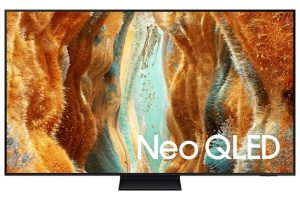
Samsung QN70F
The Samsung QN70F stands out in the mid-range segment by offering strong brightness and contrast delivered through Neo QLED technology with Quantum Mini-LED backlighting. While it doesn’t hit flagship brightness territory, its backlight design brings noticeably punchier highlights and deeper blacks than many non-Mini-LED competitors, which helps HDR content feel more dynamic.
Samsung powers this panel with its NQ4 AI Gen2 Processor, which handles upscale and noise reduction well across streaming and broadcast content. Combined with Samsung’s Tizen OS platform, you get a snappy interface with broad app support and continual software upgrades.
Gamers will appreciate Samsung’s emphasis on refresh rate flexibility. The QN70F supports 4K up to 144Hz over HDMI on multiple ports and includes VRR and ALLM, making it a versatile choice for console and PC gaming alike.
One trade-off here is HDR formats: Samsung opts for HDR10+ rather than Dolby Vision, meaning some streaming content won’t use dynamic metadata to the fullest. However, the set’s brightness and contrast do a lot of heavy lifting to make HDR content impactful on screen.
Overall, the QN70F blends performance and practicality, delivering one of the most compelling all-around experiences in its price class — especially for bright-room environments, live sports, and immersive gaming sessions.
| Samsung QN70F Prices | |
| 85-Inch (QN85QN70FAFXZA) | Check Today’s Price (Amazon.com)… |
| 75-Inch (QN75QN70FAFXZA) | Check Today’s Price (Amazon.com)… |
| 65-Inch (QN65QN70FAFXZA) | Check Today’s Price (Amazon.com)… |
| 55-Inch (QN55QN70FAFXZA) | Check Today’s Price (Amazon.com)… |
Sony BRAVIA 5 — Short Review
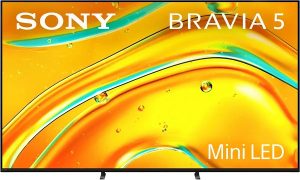
Sony Bravia 5
Sony’s BRAVIA 5 brings a distinctively premium sensibility to the mid-range fight with its Mini-LED backlight combined with Sony’s picture-processing prowess. Sony leans into what it does best: accurate colors, smooth gradations, and reliable motion handling. The result is a picture that feels refined and cinematic, particularly for movie nights and streaming first-run series where realism matters.
A standout advantage for the BRAVIA 5 is its support for Dolby Vision, which is widely used across streaming platforms and UHD Blu-ray content. This broad format support means you’re more likely to see HDR content delivered as the director intended. Sony also often includes support for additional premium HDR profiles, enhancing contrast and grayscale accuracy.
Under the hood is Sony’s Cognitive Processor XR, which focuses on scene-by-scene optimization and depth cues that make faces and objects appear more three-dimensional. While peak brightness can be a bit lower than comparable Samsung models, the trade-off is generally better out-of-the-box color accuracy and a more natural picture for film content.
On the smart front, Sony runs Google TV, which offers excellent app discovery, personalized recommendations, and tight integration with Google Assistant. For users embedded in the Android ecosystem, this can feel like a big win versus more limited smart platforms.
Gamers will find solid support here too with 4K @ 120Hz, VRR, and ALLM — though fewer HDMI 2.1 ports than Samsung’s offering — making it better suited for casual gaming alongside cinematic mixed use.
| Sony BRAVIA 5 Prices | |
| 98-Inch (K-98XR50) | Check Today’s Price (Amazon.com)… |
| 85-Inch (K-85XR50) | Check Today’s Price (Amazon.com)… |
| 75-Inch (K-75XR50) | Check Today’s Price (Amazon.com)… |
| 65-Inch (K-65XR50) | Check Today’s Price (Amazon.com)… |
| 55-Inch (K-55XR50) | Check Today’s Price (Amazon.com)… |
Samsung QN70F vs Sony BRAVIA 5 Specs & Key Features
Before diving into detailed comparisons, here’s a concise look at the core specs and features of Samsung QN70F and Sony BRAVIA 5.
| Feature | Samsung QN70F | Sony BRAVIA 5 | |||||||||
| Sizes (Typical) | 55″, 65″, 75″, 85″ | 55″, 65″, 75″, 85″, 98″ | |||||||||
| Panel Type | QLED LCD with Quantum Mini-LED | LCD with Mini-LED | |||||||||
| Processor | NQ4 AI Gen2 | Cognitive Processor XR | |||||||||
| Backlight | Quantum Mini-LED | Mini-LED | |||||||||
| Native Refresh | 120Hz | 120Hz | |||||||||
| HDR Formats | HDR10, HDR10+ | HDR10, Dolby Vision | |||||||||
| HDMI 2.1 Ports | 4 | 2 | |||||||||
| VRR | Yes | Yes | |||||||||
| ALLM | Yes | Yes | |||||||||
| Smart Platform | Tizen | Google TV | |||||||||
| Audio | Built-in speakers | Built-in speakers | |||||||||
| Voice Assistants | Bixby, Alexa | Google Assistant, Alexa | |||||||||
| Price | Lower | Higher | |||||||||
|
|
Samsung QN70F vs Sony BRAVIA 5 Comparison
Picture Quality
The Samsung QN70F delivers higher peak brightness and stronger contrast thanks to its Mini-LED backlight, making HDR highlights stand out more aggressively. It performs especially well in bright rooms and with high-impact content like sports and action movies.
The Sony BRAVIA 5 counters with superior processing accuracy, smoother gradation, and more natural-looking images. It may not be as bright, but its shadow detail and realism are excellent.
Winner: Samsung QN70F
HDR Formats & Performance
Samsung relies on HDR10+, while Sony supports Dolby Vision, which is more widely used across streaming platforms and physical media.
If HDR format compatibility matters more than raw brightness, Sony has the advantage here.
Winner: Sony BRAVIA 5
Motion & Gaming
The QN70F is clearly tuned for gamers, offering four HDMI 2.1 ports, 144Hz support, and broader flexibility for multiple consoles and PCs.
The BRAVIA 5 still performs well for gaming, but its limited HDMI 2.1 ports and lack of 144Hz support put it behind Samsung for competitive and high-refresh gaming.
Winner: Samsung QN70F
Smart Platform
Google TV on the BRAVIA 5 offers superior content discovery and integration with Google services, including Assistant and Chromecast functionality. Samsung’s Tizen OS is stable and user-friendly, but Google TV generally feels more complete for streaming and smart home tasks.
Winner: Sony BRAVIA 5
Audio
Samsung and Sony both include built-in speakers that are serviceable for everyday viewing. In practice, Sony’s tuning often delivers slightly clearer dialogue and a more balanced sound profile straight out of the box. However, both benefit significantly from a dedicated soundbar for home theater experiences.
Winner: Sony BRAVIA 5
Price & Value
Price is a major factor here. The QN70F typically lands significantly lower in price than the BRAVIA 5, especially at launch or during sales. This makes it one of the better value propositions for combined gaming and general TV use. Sony’s BRAVIA 5, while pricier, justifies its cost with more comprehensive HDR support, better color accuracy out of the box, and a more polished smart platform — which can be worth it for movie buffs and streamers.
Winner: Samsung QN70F (for overall value)
Which One Should You Choose?
If price and flexibility matter most, the Samsung QN70F is hard to beat. It brings Mini-LED brightness, broad gaming features with four HDMI 2.1 ports, and solid general performance at a typically lower cost than Sony. For families, gamers, and bright-room viewers, this makes the QN70F one of the most compelling mid-range TVs of 2025.
| Samsung QN70F Prices | |
| 85-Inch (QN85QN70FAFXZA) | Check Today’s Price (Amazon.com)… |
| 75-Inch (QN75QN70FAFXZA) | Check Today’s Price (Amazon.com)… |
| 65-Inch (QN65QN70FAFXZA) | Check Today’s Price (Amazon.com)… |
| 55-Inch (QN55QN70FAFXZA) | Check Today’s Price (Amazon.com)… |
On the other hand, if cinematic accuracy, Dolby Vision support, and smart experience are your priorities — and you’re willing to pay a bit more for refinement — the Sony BRAVIA 5 delivers a more nuanced picture and a smarter TV platform with Google TV. Its strength in color and HDR format flexibility makes it especially appealing for movie lovers and streaming enthusiasts.
| Sony BRAVIA 5 Prices | |
| 98-Inch (K-98XR50) | Check Today’s Price (Amazon.com)… |
| 85-Inch (K-85XR50) | Check Today’s Price (Amazon.com)… |
| 75-Inch (K-75XR50) | Check Today’s Price (Amazon.com)… |
| 65-Inch (K-65XR50) | Check Today’s Price (Amazon.com)… |
| 55-Inch (K-55XR50) | Check Today’s Price (Amazon.com)… |