Sony BRAVIA 5 vs Samsung QN80F: Which One Should You Choose?
Choosing a mid-range Mini-LED TV in 2025 is more complex than ever. Performance gaps between brands have narrowed, while features once reserved for premium models—such as Mini-LED backlighting, HDMI 2.1 gaming support, and advanced HDR—are now common in this price tier. The Sony BRAVIA 5 and Samsung QN80F are both designed for buyers who want a noticeable upgrade over entry-level LED TVs without paying flagship OLED or high-end Mini-LED prices.
These two models also sit in a highly competitive segment alongside alternatives like the TCL QM7K and Hisense U8QG, which often attract buyers with aggressive brightness specs and pricing. However, Sony and Samsung take different philosophies here: Sony emphasizes processing quality, Dolby Vision support, and balanced picture tuning, while Samsung prioritizes brightness, refresh rate, and gaming connectivity.
As a result, the better choice depends less on brand loyalty and more on how you actually use your TV—whether that’s watching movies in Dolby Vision, streaming daily content, or running multiple gaming devices at high refresh rates.
Sony BRAVIA 5 — Short Review
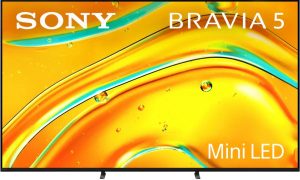
The Sony BRAVIA 5 is positioned as a core mid-range Mini-LED TV in Sony’s 2025 lineup, sitting above entry-level BRAVIA models while remaining more affordable than Sony’s higher-tier Mini-LED options. Its Mini-LED backlight allows for improved contrast control and HDR precision compared to standard full-array LED TVs.
Sony’s biggest strength continues to be image processing. Powered by Sony’s XR processor, the BRAVIA 5 delivers excellent upscaling, smooth gradation, and consistent color accuracy across different content types. This makes lower-resolution streaming and broadcast TV look cleaner and more natural.
HDR performance is a major highlight for movie-focused users. The BRAVIA 5 supports Dolby Vision, along with HDR10 and HLG, allowing compatible content to use dynamic metadata for scene-by-scene tone mapping. This is especially beneficial for streaming platforms and UHD Blu-rays mastered in Dolby Vision.
For gaming, the BRAVIA 5 supports 4K at 120Hz, VRR, and ALLM, which covers the core needs of PlayStation 5 and Xbox Series X users. However, it includes only two HDMI 2.1 ports, with one typically shared with eARC, which can be limiting if you plan to connect multiple next-gen devices simultaneously.
| Sony BRAVIA 5 Prices | |
| 98-Inch (K-98XR50) | Check Today’s Price (Amazon.com)… |
| 85-Inch (K-85XR50) | Check Today’s Price (Amazon.com)… |
| 75-Inch (K-75XR50) | Check Today’s Price (Amazon.com)… |
| 65-Inch (K-65XR50) | Check Today’s Price (Amazon.com)… |
| 55-Inch (K-55XR50) | Check Today’s Price (Amazon.com)… |
Samsung QN80F — Short Review
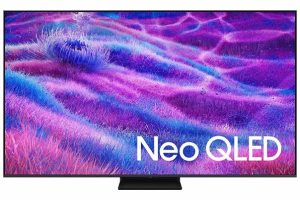
The Samsung QN80F is part of Samsung’s 2025 Neo QLED lineup and serves as a performance-oriented Mini-LED option below higher-end models like the QN85F and QN90F. It is clearly designed for users who value brightness, gaming flexibility, and connectivity.
One of the QN80F’s standout strengths is HDR brightness. In real-world measurements, it reaches approximately 930 cd/m² in a 10% HDR window, which allows highlights to appear more intense and eye-catching, particularly in bright rooms or HDR-heavy content like sports and action movies.
Gaming is where Samsung clearly differentiates itself. The QN80F supports up to 4K at 144Hz, making it especially attractive to PC gamers. In addition, it offers four full-bandwidth HDMI 2.1 ports, allowing multiple consoles, a gaming PC, and an eARC soundbar to be connected without compromise.
As with other Samsung TVs, HDR support includes HDR10, HLG, and HDR10+, but not Dolby Vision. Samsung instead relies on its brightness capability and internal tone mapping to deliver impactful HDR performance.
| Samsung QN80F Prices | |
| 100-Inch (QN100QN80FFXZA) | Check Today’s Price (Amazon.com)… |
| 85-Inch (QN85QN80FAFXZA) | Check Today’s Price (Amazon.com)… |
| 75-Inch (QN75QN80FAFXZA) | Check Today’s Price (Amazon.com)… |
| 65-Inch (QN65QN80FAFXZA) | Check Today’s Price (Amazon.com)… |
| 55-Inch (QN55QN80FAFXZA) | Check Today’s Price (Amazon.com)… |
Sony BRAVIA 5 vs Samsung QN80F Specs & Key Features
Before diving into detailed comparisons, here’s a concise look at the core specs and features of Sony BRAVIA 5 and Samsung QN80F:
| Feature | Sony BRAVIA 5 | Samsung QN80F | ||||||||||
| Panel Type | Mini-LED LCD | Neo QLED Mini-LED | ||||||||||
| Screen Size Options | 55″, 65″, 75″, 85″, 98″ | 55″, 65″, 75″, 85″, 100″ | ||||||||||
| Processor | Cognitive Processor XR | Neural Quantum Processor (2025) | ||||||||||
| HDR Peak Brightness (10% Window) | ~769 cd/m² | ~930 cd/m² | ||||||||||
| HDR Formats | HDR10, HLG, Dolby Vision | HDR10, HLG, HDR10+ | ||||||||||
| Native Refresh Rate | 120Hz | Up to 144Hz | ||||||||||
| Gaming Technology | 4K/120Hz, VRR, ALLM | 4K/144Hz, VRR, ALLM | ||||||||||
| HDMI 2.1 Ports | 2 ports (one shared with eARC) | 4 ports (full bandwidth) | ||||||||||
| Smart Platform | Google TV | Tizen (2025) | ||||||||||
| Typical Price | Often lower | Often higher | ||||||||||
|
|
Sony BRAVIA 5 vs Samsung QN80F Comparison
Breaking these TVs down by category highlights where each one truly excels.
Picture Quality
Both TVs use Mini-LED backlighting, but they approach picture quality differently. The Samsung QN80F benefits from higher peak brightness, reaching around 930 cd/m² in a 10% HDR window, which allows highlights to appear more intense and visible—especially in bright rooms or daylight viewing. This makes HDR sports, games, and action-heavy scenes look more dynamic.
The Sony BRAVIA 5, while less bright at roughly 769 cd/m², focuses on refined tone mapping and image processing. Sony’s XR processing does an excellent job preserving detail in both highlights and shadows, resulting in a more balanced and natural-looking image. Viewers who prefer a cinematic presentation over raw brightness may favor Sony’s approach.
Winner: Samsung QN80F
HDR Formats
HDR format support plays a major role in real-world viewing, especially for streaming content. The Sony BRAVIA 5 supports Dolby Vision, which uses dynamic metadata to adjust brightness and contrast on a scene-by-scene basis. This format is widely supported across major streaming platforms and UHD Blu-ray releases.
The Samsung QN80F instead supports HDR10+, Samsung’s alternative dynamic HDR format. While HDR10+ can deliver similar benefits, it is less widely adopted, meaning some HDR content will default to static HDR10 rather than using dynamic metadata.
Winner: Sony BRAVIA 5
Motion & Gaming
Samsung dominates this category thanks to its support for up to 4K at 144Hz and the inclusion of four full-bandwidth HDMI 2.1 ports, making it ideal for multi-console households and PC gamers who want higher refresh rates.
The Sony BRAVIA 5 is limited to 4K at 120Hz, which is still perfectly suited for PlayStation 5 and Xbox Series X gaming, but it does not offer the same headroom for high-refresh PC gaming. Combined with its two HDMI 2.1 ports (one typically shared with eARC), Sony’s setup is less flexible for more complex gaming configurations.
Winner: Samsung QN80F
Smart Platform
The Sony BRAVIA 5 runs on Google TV, which excels at content discovery by pulling recommendations from multiple streaming services into a unified interface. It also integrates tightly with Google Assistant and the broader Google ecosystem, which many users find convenient.
The Samsung QN80F uses Samsung’s Tizen platform (2025), known for its fast performance and wide app support. Tizen works particularly well if you already use Samsung smartphones or smart home devices, though it tends to include more promotional content on the home screen.
Winner: Draw
Audio Quality
Neither TV is designed to replace a dedicated sound system, but there are practical differences. The Sony BRAVIA 5 offers broader audio format compatibility and tuning that emphasizes dialogue clarity, which can improve everyday TV watching without external speakers.
The Samsung QN80F provides adequate built-in audio, but its format support is more limited. For users planning to rely on internal speakers or pass audio through to external systems, Sony’s approach offers slightly more flexibility.
Winner: Sony BRAVIA 5
Price & Value
In many markets, the Samsung QN80F is typically priced higher than the Sony BRAVIA 5. Samsung justifies this premium with stronger brightness performance, higher refresh rates, and four HDMI 2.1 ports.
The Sony BRAVIA 5, on the other hand, is often positioned slightly lower in price while still offering Mini-LED backlighting, Dolby Vision support, and Sony’s processing strengths. For buyers focused on movies and streaming, Sony can represent better overall value, while gamers may find Samsung’s higher price justified.
Winner: Draw
Which One Should You Choose?
Choose the Sony BRAVIA 5 if your priority is movies, streaming, and balanced picture quality. Dolby Vision support, strong upscaling, and Sony’s refined processing make it a great choice for viewers who want a cinematic experience and don’t need extensive gaming connectivity.
| Sony BRAVIA 5 Prices | |
| 98-Inch (K-98XR50) | Check Today’s Price (Amazon.com)… |
| 85-Inch (K-85XR50) | Check Today’s Price (Amazon.com)… |
| 75-Inch (K-75XR50) | Check Today’s Price (Amazon.com)… |
| 65-Inch (K-65XR50) | Check Today’s Price (Amazon.com)… |
| 55-Inch (K-55XR50) | Check Today’s Price (Amazon.com)… |
Choose the Samsung QN80F if you want brighter HDR performance and maximum gaming flexibility. With higher peak brightness, 4K at 144Hz support, and four HDMI 2.1 ports, it’s better suited for gamers and users who want the most versatile connectivity—even if that means paying a bit more and giving up Dolby Vision.
| Samsung QN80F Prices | |
| 100-Inch (QN100QN80FFXZA) | Check Today’s Price (Amazon.com)… |
| 85-Inch (QN85QN80FAFXZA) | Check Today’s Price (Amazon.com)… |
| 75-Inch (QN75QN80FAFXZA) | Check Today’s Price (Amazon.com)… |
| 65-Inch (QN65QN80FAFXZA) | Check Today’s Price (Amazon.com)… |
| 55-Inch (QN55QN80FAFXZA) | Check Today’s Price (Amazon.com)… |